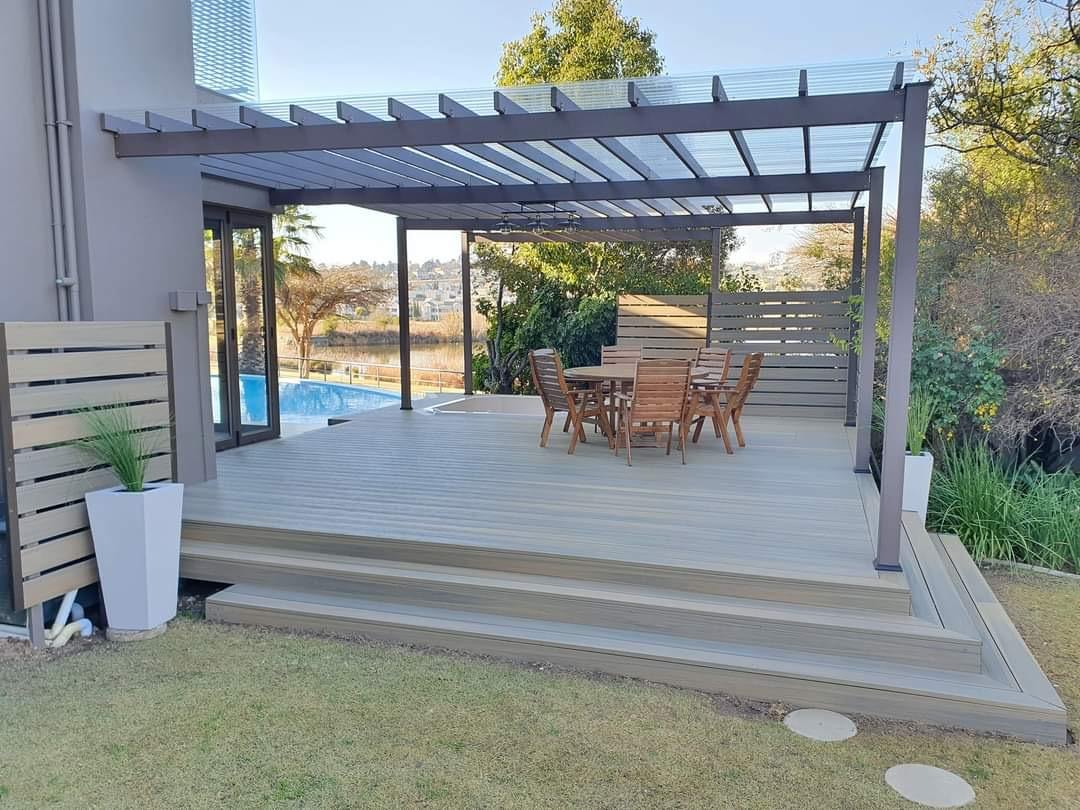

What if the most expensive part of your new deck isn't the timber you buy today, but the weekends you lose to a sander five years from now? Many Auckland homeowners find themselves stuck in a cycle of sanding and oiling; they watch their investment splinter under the harsh Kiwi sun or succumb to the coastal humidity. When weighing up composite vs timber decking NZ, it's easy to feel torn between the traditional appeal of natural wood and the promise of a maintenance-free lifestyle. You want a space that adds genuine value to your home without becoming a second job.
We understand that choosing the right material is about more than just aesthetics. It's about how you'll use your outdoor space for the next decade. This guide provides an honest look at the pros and cons of both materials, specifically tailored for our unique New Zealand conditions. We'll explore which options handle high UV levels best, clarify the true 10-year maintenance schedules, and help you decide if modern composite has finally outgrown its "plastic" reputation. From Auckland's damp winters to the scorching summer heat, you'll discover exactly what it takes to build a durable, beautiful deck that stands the test of time.
Key Takeaways
- Learn how New Zealand’s high UV levels and humidity impact the longevity of your boards, from timber silvering to composite thermal expansion.
- Discover the reality of a 10-year maintenance schedule and whether you prefer the ritual of sanding and oiling or a simple soapy water wash.
- Compare the lifecycle costs of composite vs timber decking NZ to determine if a higher upfront investment provides better long-term value for your property.
- Understand the specific environmental factors in Auckland, such as coastal salt spray and humidity, that dictate which materials resist rot and mould most effectively.
- Gain expert insights into how bespoke design and professional installation can turn a standard backyard into a durable, high-value outdoor room.
The Great NZ Decking Debate: Natural Timber vs. Modern Composite
The Kiwi backyard has undergone a significant transformation over the last decade. What used to be a simple Radiata Pine platform for the barbecue has evolved into a sophisticated extension of the home. Modern decks are different. These outdoor rooms often feature integrated seating, outdoor kitchens, and complex multi-level designs. Because these spaces are now high-value assets, the choice between composite vs timber decking NZ is more critical than it was ten years ago. A mistake in material choice can lead to years of frustrating maintenance or premature failure in Auckland’s challenging microclimates.
Auckland homeowners face a unique set of environmental pressures. From the salt-laden winds of the North Shore to the high humidity of the Waitakere valleys, your deck must withstand intense UV levels and constant moisture. The main contenders in this arena remain traditional Radiata Pine, durable hardwoods like Kwila and Vitex, and modern wood-plastic composites. Each material responds differently to our local conditions, and understanding these nuances is the first step toward a successful build.
Traditional Timber: The Natural Kiwi Favourite
There is an undeniable charm to real wood that many homeowners find difficult to replace. The tactile warmth of timber underfoot during a Kiwi summer remains a benchmark for comfort. In New Zealand, we typically choose between softwoods like H3.2 Treated Pine and premium hardwoods. While Pine offers an accessible entry point, hardwoods like Kwila provide superior density and a rich, dark aesthetic. However, sourcing matters. In 2026, responsible homeowners increasingly look for certified sustainable timber to ensure their backyard retreat doesn't come at an environmental cost.
The Rise of Composite: Engineering for Low Maintenance
As lifestyles become busier, the demand for "set and forget" solutions has surged. Wood-plastic composites (WPCs) are engineered materials that blend recycled wood fibres with plastic polymers to create a board that resists rot, warping, and splinters. Early generations of composite were often criticised for looking "fake" or overly plastic. Modern manufacturing has solved this by using advanced capping technology and variegated grain patterns that mimic natural wood with surprising accuracy.
One of the biggest draws for the modern composite vs timber decking NZ debate is the finish. Composite systems often utilise hidden clips, resulting in a sleek, screw-free surface that timber can rarely match without significant extra labour. This evolution represents a shift from purely functional surfaces to high-end architectural features designed for longevity. Every site is unique, and selecting the right material depends entirely on your specific location and how you intend to spend your weekends.
Performance in the NZ Elements: UV, Humidity, and Salt Spray
The New Zealand sun is famously unforgiving. Our high UV levels act like a slow-motion wrecking ball on organic materials, making the choice of composite vs timber decking NZ a decision about long-term durability. While timber boards eventually lose their natural oils and silver off, composite boards face a different challenge: heat absorption. Thermal expansion is the physical increase in the length and width of decking boards as they absorb heat from direct sunlight. Without careful planning, this natural movement can compromise the structural integrity of your outdoor space.
Auckland's humidity adds another layer of complexity. Damp air and frequent rain create a breeding ground for mould and mildew, particularly on softwoods. For those living in coastal areas like the North Shore or Hibiscus Coast, salt spray is a constant factor that can accelerate the degradation of lower-quality timber. Choosing the right material requires a professional assessment of your site's microclimate to ensure your investment doesn't rot from the inside out.
Timber Resilience: Cracking, Splitting, and Cupping
Real wood is a hydroscopic material. It constantly absorbs and releases moisture, which causes the boards to "breathe." In Auckland’s intense wet-dry cycles, this movement often leads to cupping, where the edges of the board rise higher than the centre. Over time, the stress of this movement results in surface checking or deep cracks. For families with young children or pets, the eventual appearance of splinters is a genuine safety concern that requires regular sanding to manage.
Composite Stability: Heat Retention and Fade Resistance
Modern composite technology has made huge strides in managing the elements. High-quality capped boards are designed with UV inhibitors that protect the colour for decades. You won't see the dramatic silvering common with Kwila or Pine. However, heat retention is a factor to consider. Darker composite boards can become significantly hotter than natural timber in direct afternoon sun.
To handle the thermal expansion mentioned earlier, composite decks require precise expansion gaps between the butt-ends of the boards. This technical necessity allows the material to grow and shrink without buckling. When installed correctly by a specialist, these gaps are nearly invisible and ensure the deck remains perfectly flat regardless of the temperature.
Maintenance and Longevity: The "Set and Forget" Reality Check
Many homeowners choose composite boards because they want to escape the endless cycle of sanding and staining. However, the term "low maintenance" is often misunderstood. In the context of composite vs timber decking NZ, every outdoor surface requires some level of care to survive our environment. While a composite deck might only need an occasional soapy water wash and the removal of organic debris, a timber deck demands a rigorous 12-18 month schedule of deep cleaning and oiling to prevent the wood from drying out. If you ignore the maintenance of your timber joists, the trapped moisture between the boards and the frame can cause internal rot that eventually makes the entire structure unsafe.
The Hidden Costs of Timber Upkeep
The upfront price of timber is often lower, but the ongoing expenses quickly accumulate. High-quality deck oils and specialised cleaners aren't cheap. Over a five-year period, the cost of these materials can rival the initial price difference of a composite alternative. Then there is the "hassle factor." Maintaining a 20-square-metre timber deck usually consumes a full weekend of labour. If you skip just one season in Auckland’s humid climate, the damage becomes compounding. Dirt and mould spores embed themselves into the grain, making the next restoration twice as difficult and significantly shortening the wood's aesthetic life.
Longevity: How Long Will Your Deck Actually Last?
Material lifespans vary significantly across the New Zealand market. A standard Radiata Pine deck typically lasts around 15 years before the soft wood begins to fail structurally. Premium hardwoods like Kwila can reach 25 years or more if they are meticulously oiled. High-end composite products are often rated for 25 to 30 years and come with warranties that cover fading and staining; however, it’s vital to read the fine print regarding proper ventilation and installation methods.
A critical point often missed by DIY guides is that the substructure usually fails before the decking boards. Even if you invest in 30-year composite boards, they are almost always installed over a treated pine frame. Without protective measures like joist tape or professional-grade drainage planning, the frame may succumb to rot within 15 years, leaving you with perfectly good boards on a crumbling foundation. Investing in a quality build means looking at the longevity of the entire system, not just the visible surface.
Cost Analysis: Initial Investment vs. 15-Year Life-cycle Value
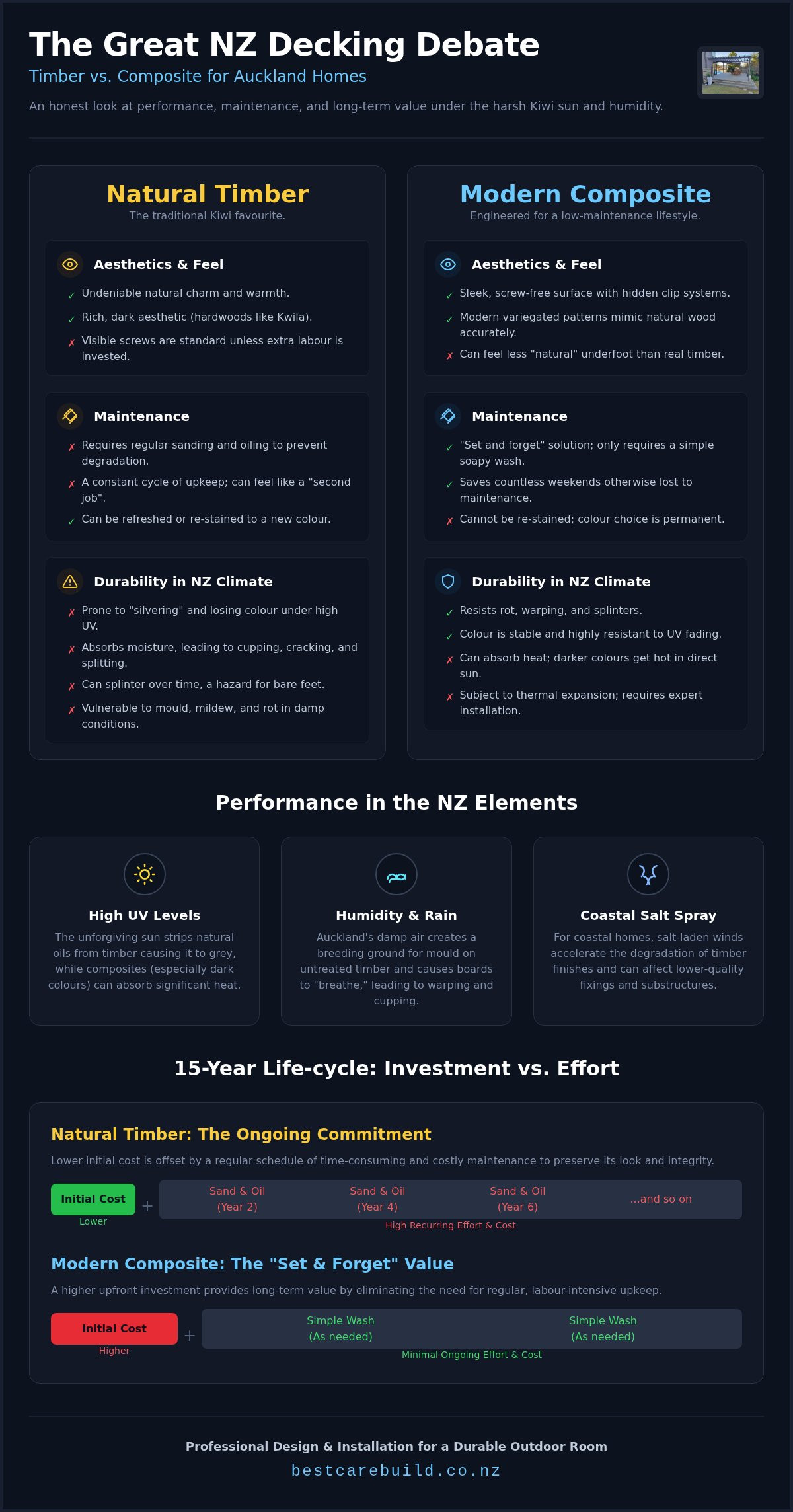
Understanding the financial commitment of a new deck requires looking beyond the initial quote. When comparing composite vs timber decking NZ, the upfront investment for composite can be anywhere from 50% to 100% higher than traditional timber. This gap often causes sticker shock, but the true value reveals itself over a 15-year lifecycle. While timber requires constant reinvestment to stay functional, composite boards are essentially a prepaid maintenance plan. You're paying more today to ensure you don't have to pay with your time and money every year for the next decade.
Budgeting for a Timber Project
Pine remains the entry-level choice for Auckland backyards because of its accessibility. However, the price of timber isn't static. It fluctuates based on species, board width, and current supply chains. Beyond the build, you must account for the "maintenance tax." Supplies for a standard deck, including high-quality oils and specialised cleaners, typically cost between NZ$300 and NZ$600 per year. Over a decade, these small purchases add up to a significant sum that many homeowners fail to include in their initial budget. If you aren't prepared for this ongoing cost, the timber will eventually degrade, leading to expensive repairs.
Investing in Composite Quality
The higher price tag of composite reflects the complex engineering required to bond recycled wood fibres with durable polymers. It's a mistake to fall into the "cheap composite" trap. Low-tier products often lack the protective "cap" that prevents fading and staining in the harsh New Zealand sun. Investing in mid-to-high tier products ensures you get the full benefit of zero oiling costs for the life of the deck. This reliability is a major selling point for Auckland property buyers, who often view a well-maintained composite deck as a high-value, hassle-free asset that justifies a higher resale price.
The break-even point usually occurs between years seven and ten. At this stage, the accumulated costs of timber maintenance and labour surpass the original premium paid for composite. If you're planning to stay in your home long-term, the financial argument for composite is compelling. When you consider the total cost of ownership, the debate between composite vs timber decking NZ often shifts from initial price to long-term sanity. For a detailed breakdown of how these materials fit your specific site and budget, you can request a professional consultation with our specialist team.
Designing Your Ideal Outdoor Space with Bestcare Builders
Deciding on the right material for your home is only the first step in creating a functional outdoor room. At Bestcare Builders, we act as your local partners to ensure the choice of composite vs timber decking NZ aligns with the specific geography of your Auckland property. Many residential sites in our region involve complex slopes or tight boundaries that require more than just a standard installation. Our team specialises in bespoke solutions that integrate your new deck with essential structural elements like retaining walls, custom fencing, and pergolas to create a cohesive, high-value landscape.
We pride ourselves on being a "safe pair of hands" for homeowners who value clear communication and meticulous craftsmanship. Based in Mt Albert, we understand the local conditions and the specific aesthetic of Auckland’s diverse suburbs. Whether you are looking for a sleek, modern composite finish or the timeless appeal of a Vitex hardwood deck, our focus remains on providing a durable structure that enhances your lifestyle and adds enduring value to your property.
Our Bespoke Consultation Process
We don't believe in one-size-fits-all solutions. A deck on a wind-swept cliff in Whangaparaoa requires a different technical approach than a sheltered patio in a leafy central suburb. During our initial visit, we assess your site’s sun exposure and drainage requirements to recommend the best fastening systems and board orientations. We also take the time to match material choice to your lifestyle. If you have pets or young children, we often suggest capped composite for its splinter-free surface and superior stain resistance. If you prefer the natural character of real wood, we'll help you select the best species for your budget. Every consultation concludes with a transparent quote, ensuring you have a clear understanding of the project scope with no hidden surprises.
Start Your Auckland Backyard Transformation
Transitioning from a vision to a finished project is a methodical, stress-free process when you work with specialists. We manage the entire timeline, from the initial design and Auckland Council building consent checks for decks over 1.5 metres high, to the final site clean-up. You can view our portfolio of completed projects across the Auckland region to see how we've transformed ordinary backyards into luxury outdoor living areas. Our reputation is built on a commitment to high standards and a genuine focus on client satisfaction throughout the build.
Ready to see how we can transform your outdoor living space? You can organise a free site visit and quote from the Bestcare Builders team to discuss your specific project needs and get expert advice on the best decking solution for your home.
Building a Deck That Complements Your Kiwi Lifestyle
Selecting the right material is a choice between the tactile tradition of wood and the engineered ease of modern technology. When you weigh up composite vs timber decking NZ, remember that the best decision is one that fits your willingness to maintain the surface over the next fifteen years. Whether you choose the natural warmth of Kwila or the resilience of a capped composite board, the foundation of your investment relies on expert installation tailored to your specific site conditions. The harsh Auckland sun and humidity don't negotiate, so your material choice must be as disciplined as the craftsmanship behind it.
As locally owned Auckland specialists, Bestcare Builders provides the expertise in custom outdoor structures needed to navigate these complex choices. We take pride in our high-quality workmanship and reliable communication, ensuring you feel like you're in a safe pair of hands from the first design sketch to the final board. We focus on creating durable, bespoke spaces that add genuine value to your home.
Ready to transform your backyard? Get a professional quote for your Auckland decking project from Bestcare Builders and take the first step toward a beautiful, durable outdoor room. We look forward to helping you create a space where your family can make memories for decades to come.
Frequently Asked Questions
Is composite decking more slippery than timber when wet in NZ?
High-quality composite decking is generally no more slippery than timber, provided you choose a board with a textured, slip-resistant surface. In many cases, timber becomes more hazardous over time if algae and biofilm are allowed to build up in the grain. Most modern composite products are engineered with specific slip ratings for wet conditions. Regular cleaning is the most effective way to maintain safety for both materials during damp Auckland mornings.
Does composite decking fade in the harsh New Zealand sun?
Modern capped composite boards are highly resistant to fading, though they aren't entirely immune to our intense UV levels. While traditional timber will silver off within months without regular oiling, high-quality composites are designed to retain their core colour for decades. You might notice a very slight lightening during the first few months of exposure as the material settles, but the deep pigments are engineered to withstand the southern hemisphere sun.
Can I install a composite deck myself, or do I need a specialist builder?
You can technically install a composite deck yourself, but hiring a specialist builder is recommended to ensure you don't void the product warranty. Composite boards require precise expansion gaps and specific hidden fastening systems that differ from traditional timber methods. Mistakes in the substructure or ventilation can lead to buckling or heat-related damage. A specialist ensures the frame is perfectly level and accounts for the technical requirements of thermal movement.
Which decking material is best for a pool area in Auckland?
Composite decking is often the superior choice for Auckland pool areas because of its moisture resistance and splinter-free surface. It won't rot when exposed to splashed water and remains comfortable for bare feet even in high summer. When comparing composite vs timber decking NZ for poolside use, composite wins on safety; it doesn't leach tannins into the pool water or require the heavy chemical staining that timber needs to survive.
How do I clean mould off a composite deck in a damp Auckland winter?
To clean mould off a composite deck during a damp winter, use a soft-bristled brush and a solution of warm, soapy water. Avoid using harsh bleach-based chemicals or high-pressure washers, as these can damage the protective cap of the boards. For stubborn spots, specialised composite cleaners are available that target organic growth without affecting the colour. Keeping the deck clear of fallen leaves and debris will prevent mould from taking hold.
Is Kwila decking still a sustainable choice for NZ homeowners?
Kwila remains a popular choice, but its sustainability depends entirely on its sourcing and certification. Many reputable New Zealand suppliers now provide Kwila that is certified by international bodies to ensure it comes from responsibly managed forests. Homeowners should always ask for proof of sustainable harvesting. If environmental impact is your primary concern, the composite vs timber decking NZ debate often favours composite for its use of recycled plastics and reclaimed fibres.
Do I need a building consent for a new deck in Auckland?
In Auckland, a building consent is generally not required for a deck if the fall height is under 1.5 metres from the ground. This threshold remains the standard for low-risk building work in 2026. However, if your deck is higher than 1.5 metres, or if it forms part of a pool safety barrier, a consent is mandatory. It is always best to verify your specific plans with the Auckland Council or your builder before starting.
Can I mix timber and composite materials in one outdoor project?
Yes, you can certainly mix timber and composite materials to balance your budget and aesthetic goals. It is very common to use a treated timber substructure with composite surface boards to save on costs while enjoying a low-maintenance finish. You might also choose timber for decorative features like pergolas or fencing while keeping the high-traffic floor area composite. The key is ensuring that the connection points account for the different expansion rates.
